Article featured in Wellbeing in International Schools Magazine
In a previous article, we explained five reasons why the ‘catch-up’ narrative in education threatens to harm the mental health of children and adolescents.
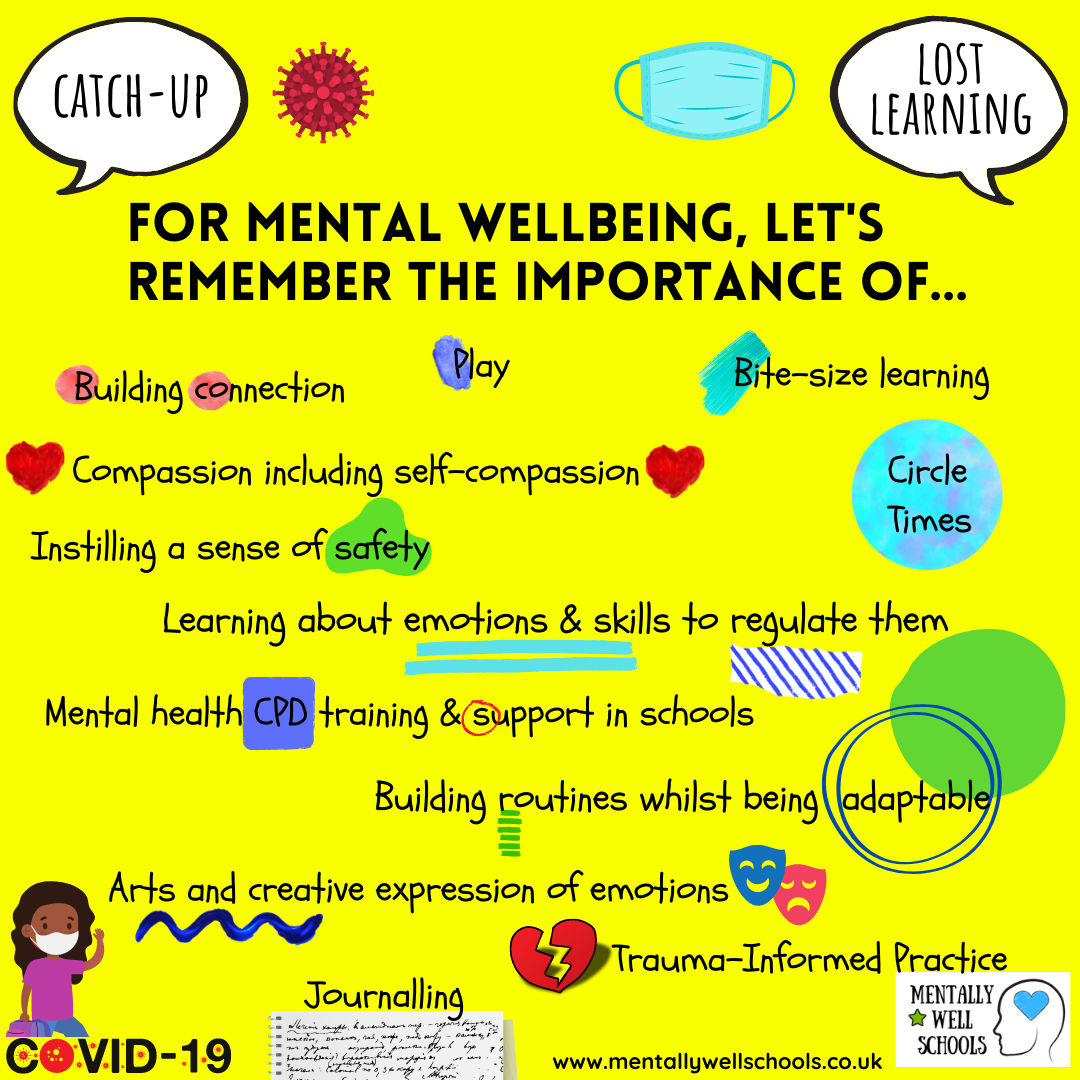
This article goes on to provide five alternatives to focussing on academic ‘catch-up’ that will support students’ mental wellbeing as they emerge from the pandemic, and improve their medium to long term life outcomes. It’s important to say that these approaches are not exclusive, and can sit alongside and be woven into ‘catch-up’ scenarios.
As we wrote in the previous blog:
Pressure to ‘catch-up’ negates the needs of many children and young people who have been impacted psychologically by events of the last year.”
Analysis by the Royal College of Psychiatrists in the UK published in April 2021 found that:
Our children and young people are bearing the brunt of the mental health crisis caused by the pandemic and are at risk of lifelong mental illness.”
International findings by the United Nations echo those in the UK, with the Secretary-General António Guterres stating in July 2021 that the pre-pandemic child mental health crisis has been magnified by the COVID crisis:
…mental health services have long suffered from neglect and underinvestment. Too few children get the services they need…The COVID-19 pandemic has magnified the problem. As we consider investing in a strong recovery, support for children’s mental wellbeing must be a priority.”
Evidence of adverse mental health effects such as trauma may not be immediately apparent to educators, or to parents and carers. In some instances, the effects can present months or years after an adverse or traumatic event.
Especially in the case of children and young people who are ‘well behaved’ in school, obvious signs of trauma and the mental health toll of the pandemic may not be immediately apparent, masking the hidden reality for many children and young people in schools around the world.
The five approaches are:
• Based on Trauma-Informed Practice, and
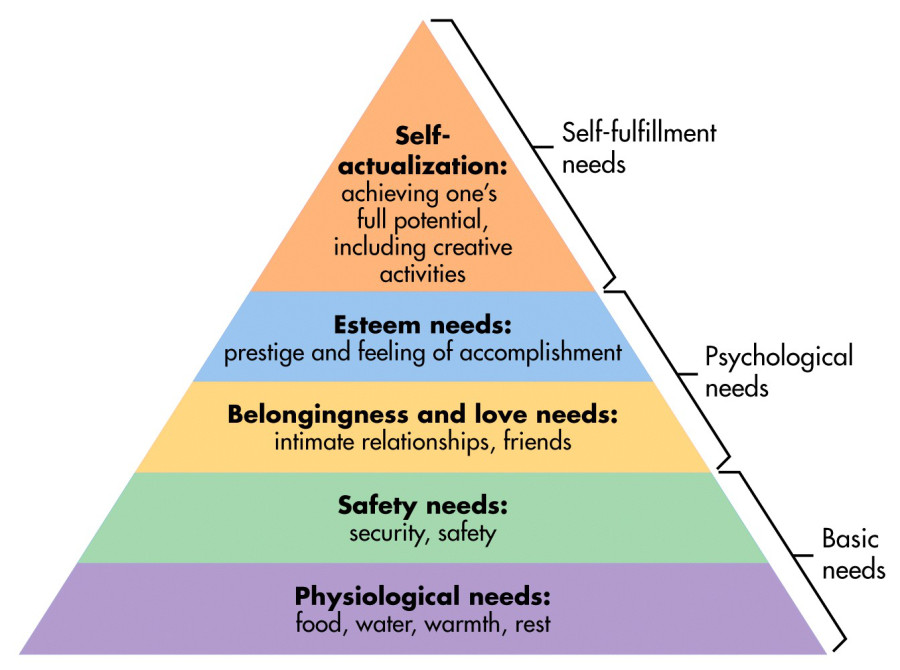
• Link with Maslow’s Hierarchy of Needs – one of the best known theories of motivation.
Maslow’s Hierarchy of Needs
(image credit: SimplyPsychology.org)
Schools and educators can implement the approaches which follow, in recognition that the pandemic and its effects are very likely to have constituted adverse or traumatic life events for significant numbers of children and adolescents.
Putting these approaches in place will also build students’ motivation to enable any ‘catch-up’ learning to be more effective.
The five approaches are…
1️⃣ Regular scheduled breaks, protected recreational time, and bite-sized learning
These measures will help mitigate the effects of stress and arousal of the amygdala, the brain’s emotional ‘smoke detector’. Activation of the amygdala creates a greater potential for emotional dysregulation including anxiety and anger.
Chronic arousal of the amygdala can lead to mental ill health including conditions such as Post Traumatic Stress Disorder (PTSD).
The amygdala and the body’s associated threat system are likely to have been working overtime for many children and adolescents during the pandemic, including on their return to school amid the ongoing crisis.
In terms of the impact on learning ability, when the amygdala is activated, it overrides the activity of the brain’s pre-frontal cortex which is responsible for cognition, executive function and learning.
The pre-frontal cortex enables tasks such as planning, organising, analysing, making decisions and problem solving.
Regular breaks and more manageable chunked learning will help to calm the amygdala, thus promoting more emotion regulation and engagement with the prefrontal cortex of the brain, enabling more effective learning.
The need for breaks and recreational time also applies to the length of the school day and holidays. This is relevant at a time when various governments and school leaders globally have been contemplating longer school days and shorter school holidays to enable ‘catch-up’ learning. Such measures are likely to prove counterproductive for many students’ welfare and the wellbeing of staff.
This proposed theme correlates with basic psychological needs in Maslow’s Hierarchy, specifically the need for rest as a foundation for feeling motivated. Bite-sized learning also links with esteem needs, enabling students to feel a regular sense of accomplishment.
2️⃣ Building authentic connection and a sense of safety
This involves proactively working to ensure that children and young people view adults in school as emotionally ‘safe’ people to confide in, talk to, and help them resolve issues as far as possible.
In this way, ‘emotional co-regulation’ can be promoted by staff in schools as a precursor to self-regulation on the part of children and young people who may be struggling emotionally.
…co-regulation comprises a set of supportive and reciprocatory interactions between the child and caring adults. As part of this process, ‘support, coaching, and modelling are provided to facilitate a child’s ability to understand, express and modulate their thoughts, feelings and behaviour’.” (Murray et al., 2015)
“Supportive co-regulation is built on creating a safe and secure adult–child relationship such that children learn to trust that their caregivers will help them through stressful situations and emotions.” (Fox, 1998)
Fostering safe and supportive relationships between students and staff very often pays dividends through mitigating problematic behaviour stemming from emotional dysregulation.
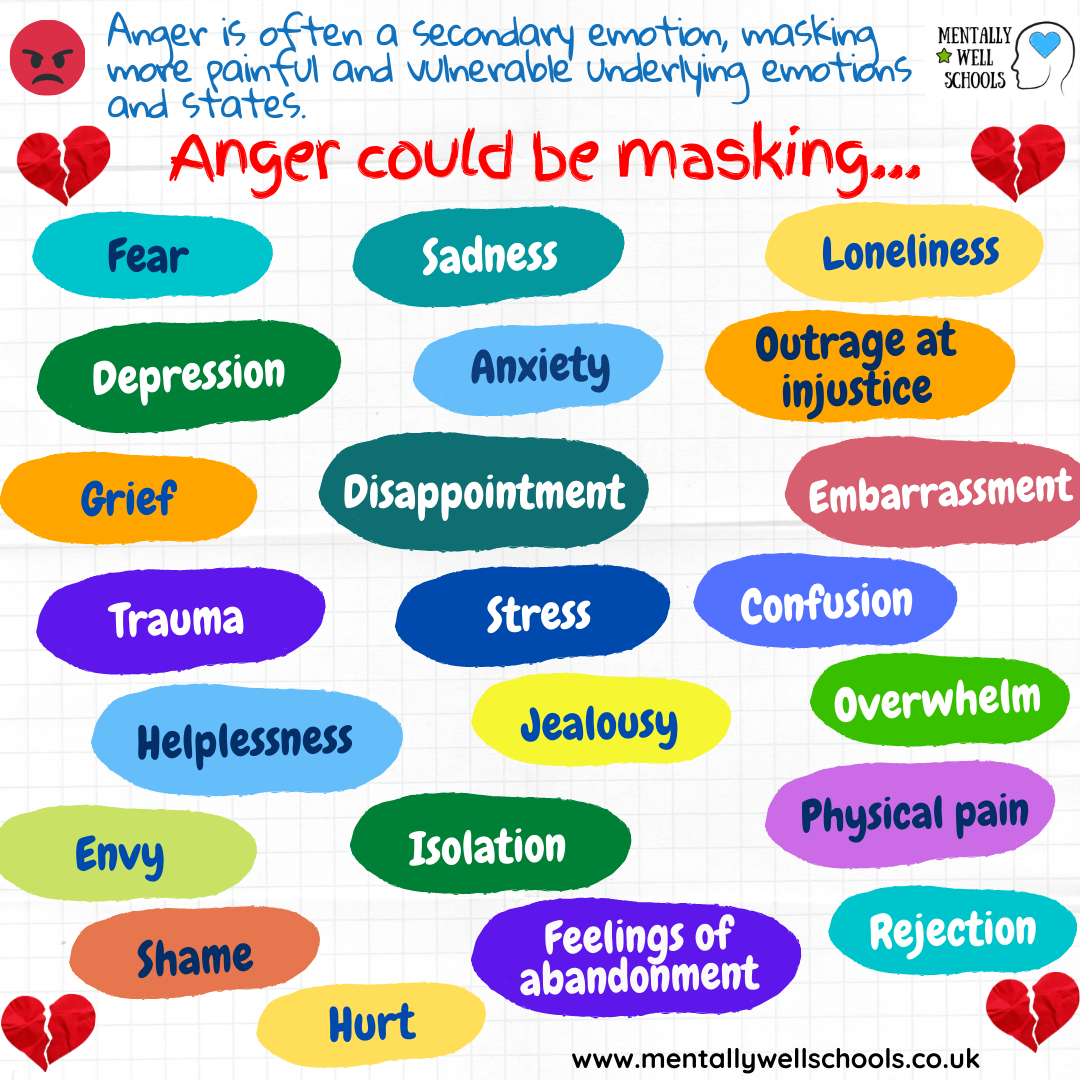
In the case of students who are ‘acting out’, it’s important for educators to bear in mind that anger is often a secondary emotion which masks more painful and vulnerable underlying emotions such as anxiety, shame and sadness.
Accordingly, it’s important to veer away from zero-tolerance behaviour policies and other behaviour management techniques that are shame-based, as they are only likely to worsen underlying painful emotional states such as anxiety, overwhelm and shame, which can form the basis of mental ill health.
In responding to behaviours which may seem undesirable or unusual, one of the core tenets of Trauma-Informed Practice is shifting from a perspective of “What’s wrong with you?” to, “What happened to you?”
Emotional safety is key. Knowing that teachers and other school staff are approachable, kind, non-judgmental and open to talking with or holding space for children or young people about how they feel or what may be troubling them, could make a real difference to a student’s mental wellbeing, both in the short and longer term.
Feeling safe in the knowledge that staff are making reasonable concessions in terms of academic tasks and other areas of school life, especially in light of the unprecedented and unforeseen events of the last year or so, is also likely to make a difference in helping alleviate psychological stress.
Finally, assuring physical safety also feeds into students feeling more emotionally safe. To this end, maintaining sensible precautionary measures around limiting the spread of the virus on school premises, will play an important part in instilling a sense of psychological safety.
This recommended theme correlates with basic safety needs in Maslow’s Hierarchy, as well as psychological needs for belonging, friendship and love.
3️⃣ Opportunities to talk about and give expression to feelings and thoughts about the pandemic, and other challenging events
This includes regular Circle Times and other forms of guided discourse about questions and concerns students have, and about what may be troubling them in their lives.
It also encompasses less structured, and more personal and creative expressions of thoughts and emotions, such as art and creative writing.
Acting and drama are also ways of processing and giving voice to challenging experiences which have occurred during the pandemic, and to the emotions and thoughts which these experiences may have provoked.
Daily journalling is a proven cathartic and therapeutic tool for working through challenging emotions and experiences. See this link for ideas on how to approach and advocate journalling with students.
It’s important to note that even before the pandemic, many young people were already deeply troubled by the ecological crisis, and the COVID crisis will only have served to amplify their despair about the world and their future in it.
Furthermore, the murder of George Floyd in May 2020 and the subsequent highlighting of social inequality and injustice, both racially and otherwise in many countries around the world, only adds to the potential for emotional turmoil, despair and hopelessness on the part of many children and young people.
Regular opportunities to discuss and explore these global issues affecting humanity, in an informed, sensitive and compassionate way, can form an important part of validating young people’s concerns and helping them feel supported in navigating these challenges.
This recommended theme of encouraging expression of children’s and young people’s lived experiences and concerns, corresponds with fulfilling safety needs in Maslow’s Hierarchy, as well as psychological needs for a sense of belonging.
…even before the pandemic, many young people were already deeply troubled by the ecological crisis, and the COVID crisis will only have served to amplify their despair about the world and their future in it.”
4️⃣ Actively promoting compassion towards others and self-compassion
This links with a previously mentioned focus on fostering authentic connection and emotional safety, and is also distinct and important in its own right.
Distressing and traumatic experiences often lead to feelings of shame and attempts to repress one’s true thoughts and feelings, especially if a child or young person is struggling with regulating their emotions.
The role of shame in trauma, including in the development of PTSD, is well documented. One of the dangers of focussing too much on academic ‘catch-up’ with students who are already experiencing psychological distress, is that academic pressure could serve to re-traumatise them, thus exacerbating the existing trauma.
If test scores and grades become paramount, students who are unable to perform in line with expectations are likely to internalise that sense of failure together with the shame that it engenders, galvanising the shame they may already be feeling about their inner emotional state, and leading to greater potential for mental ill health.
Modelling compassion and promoting self-compassion are key facets of improving students’ mental health and wellbeing. The “Self-Compassion Poster” on this page could offer a helpful starting point.
This proposed theme links to psychological needs for love and belongingness in Maslow’s Hierarchy of Needs. Compassionate approaches around workload and academic expectations would link with esteem needs in the hierarchy, enabling students to feel a sense of accomplishment and prestige.
If test scores and grades become paramount, students who are unable to perform in line with expectations are likely to internalise that sense of failure together with the shame that it engenders, galvanising the shame they may already be feeling about their inner emotional state, and leading to greater potential for mental ill health.”
5️⃣ Learning about mental health, including thoughts and emotions, and skills to help regulate emotions
With mental health issues on the rise among young people even before the pandemic, and with the immense ecological, socio-economic and political challenges which the world currently faces, learning strategies to build psychological resilience truly constitutes vital skills for life.
Embedding learning about emotional wellbeing and mental health into the school curriculum is a key part of any effective school strategy to support and improve children’s and young people’s mental wellness and life outcomes.
Strategies from evidence-based approaches which have been efficacious in school settings in improving mental health, such as Cognitive Behavioural Therapy (CBT), Social and Emotional Learning (SEL), and Dialectical Behaviour Therapy (DBT), would be invaluable. DBT incorporates both CBT and SEL skills, as well as Mindfulness.
In addition to a comprehensive whole-school PSHE curriculum and programmes to equip students with evidence-based skills to manage their emotional wellbeing, CPD training for all staff is also a key aspect of promoting mental wellness of students.
This would include training on how different types of emotional issues and stress can manifest in children and young people, and early intervention and support strategies.
It could also include training on Trauma-Informed Practice, which has been introduced in this article, in order to learn about the potential lifelong impacts of Adverse Childhood Experiences (ACEs), various risk and protective factors, and strategies to help mitigate the effects of adverse and traumatic childhood experiences.
This free 1-hour online training about Adverse Childhood Experiences could be a helpful introduction for staff in schools.
Comprehensive whole-school training in Trauma-Informed Practice would help staff to support emotional wellbeing and avoid unwittingly re-traumatising and exacerbating mental ill health being experienced by children and young people in their care.
Finally, school counsellors clearly and undoubtedly have a very important part to play in promoting mental wellbeing of students, as do all members of school communities.
Training in Trauma-Informed Practice would help school staff to support emotional wellbeing and avoid unwittingly re-traumatising and exacerbating mental ill health being experienced by children and young people in their care.”
This approach helps fulfil the basic need for safety in Maslow’s Hierarchy. In addition, equipping students with knowledge about mental wellbeing and healthy coping skills promotes the sense of accomplishment and self-esteem which Maslow outlines.
Gaining mastery in skills to regulate emotions and build psychological resilience can in turn lead students to the pinnacle of Maslow’s Hierarchy, which is the need for self-actualisation and achieving one’s full potential.
Even before the pandemic, there was a mental health crisis afflicting many children and young people around the world. With vaccination programmes progressing in various countries globally, it could be easy to gloss over the amplifying effects of the COVID crisis on the mental health of children and young people.
As recent research in 2021 from both the UK and the UN warns that children and adolescents have borne the brunt of the global crisis, posing lifelong risks to their mental health, it behoves school leaders to heed the warnings and put appropriate measures in place to support young people’s emotional and mental recovery.
The five approaches outlined in this article provide a starting point, in line with Trauma-Informed Practice and Maslow’s Hierarchy of Needs, for schools to improve students’ mental wellbeing and life chances through childhood and into adulthood.
Ava Shabnum Hasan
Founder of Mentally Well Schools and Associate Lecturer on the ‘MSc Mental Health & Wellbeing in Education’ at Buckinghamshire New University. A former SENDCo and Senior Leader in schools in England and internationally, with 20 years’ experience in education, now working with a leading Psychotherapist.
Mentally Well Schools is an online platform of free mental health and wellbeing resources, paid evidence-informed programmes, and CPD training to improve student and staff mental health, including a DfE (Department for Education, U.K.) quality assured course. www.mentallywellschools.co.uk
P.S. If you have something to say in response to this post, please make a comment below. We’d welcome your thoughts!
Guest blog post by David Morris of Muse Wellbeing Why Is Emotional Wellbeing Important for…
Guest blog article by Dr Rachel Briggs Although supervision has been available to some educators…
A Headteacher in my network messaged me on LinkedIn and asked me what I think…
The linked themes chosen by the World Federation for Mental Health Mental Health in an…
Guest blog by Christopher Roche The Covid-19 pandemic has posed a range of challenges for…